A Business Guide to NCOA
 Firstlogic Team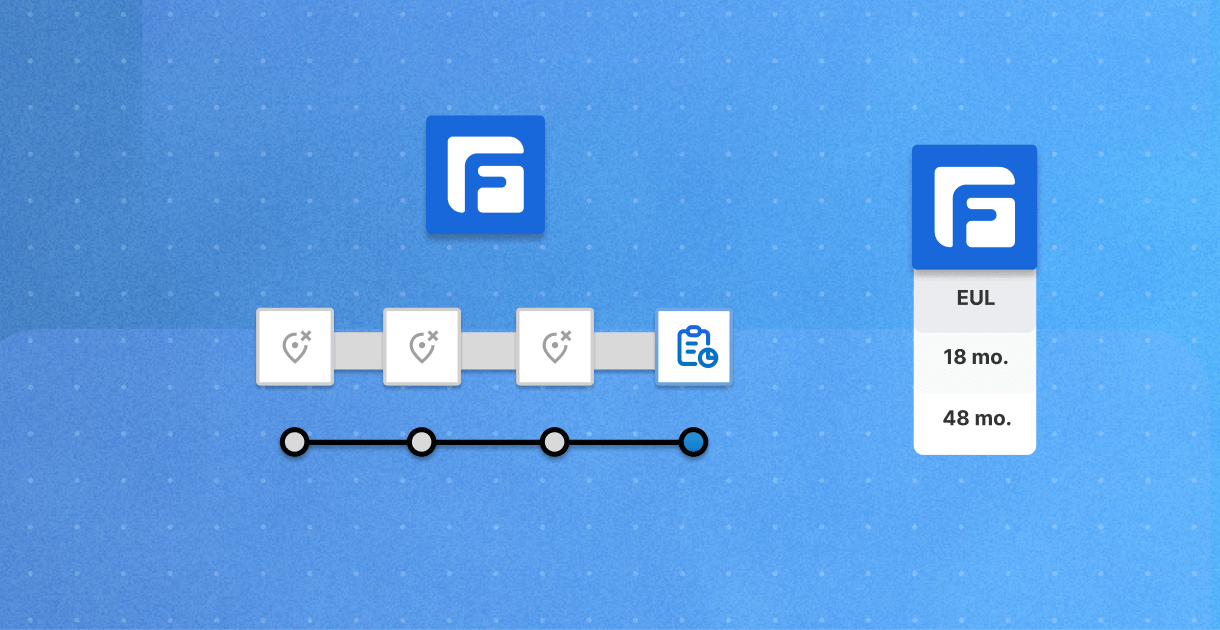
For large organizations, effective use of NCOA reduces waste, ensures regulatory compliance, and maintains critical communication channels with customers. This guide covers the operational, technical, and legal realities of integrating NCOA into your business workflow.
The NCOA Ecosystem
While often referred to simply as “NCOA,” the system functions as a tripartite structure ensuring that mailers can identify address changes for individuals, families, and businesses before mail enters the mail stream.
- The Database: A master file containing approximately 160 million permanent change-of-address (COA) records.
- The Licensing System: A strict hierarchy determining who can access the data and how it is distributed.
- The Software: Certified interface engines required to match raw business data against the USPS master file.
Market Reality
- Annual Movers: Approximately 40 million Americans move every year.
- Churn Rate: Roughly 14-15% of the total population moves annually.
- Monthly Volume: About 3.3 million new moves are recorded every month.
The Business Case: ROI and Compliance
The primary drivers for NCOA adoption are financial efficiency and regulatory adherence.
Financial Impact
Using NCOA prevents Postage Waste (paying for mail that cannot be delivered) and Material Costs (printing, envelopes, and inserts). Furthermore, it improves Operational Efficiency by reducing the labor required to process physical returned mail.
The “Move Update” Compliance Standard
To qualify for Presorted First-Class Mail or Marketing Mail discounts, mailers must update their addresses within 95 days prior to the mailing date. Failure to verify addresses can result in the loss of bulk mail discounts based on error rates found during verification.
Licensing & “Build vs. Buy”
The USPS does not distribute data freely; it uses a tiered licensing model to control security and market structure. Most businesses will fall into one of three categories:
- Full Service Provider (FSP): Large service bureaus with access to 48 months of data, updated weekly.
- Limited Service Provider (LSP): Smaller mail houses with access to 18 months of data, focusing on recent moves.
- End User Licensee (EUL): Large organizations (Banks, Insurers, Utilities) that process data in-house for security reasons, strictly limited to their own proprietary data.
The Technical Hurdle: CASS Certification
It is generally economically and technically infeasible for a standard company to build its own NCOA engine. To process NCOA data, you must use CASS (Coding Accuracy Support System) Certified™ software.
This software must standardize addresses, validate ZIP+4 codes, and apply complex fuzzy matching logic. Developers must pass a rigorous USPS test deck annually with near-100% accuracy. Consequently, most organizations “buy” rather than “build,” licensing certified interface software from vendors like Firstlogic.
Security & Audit Requirements
As an End User Licensee or a user of NCOA data, you are in possession of the private move data of millions of Americans. The USPS treats this similarly to PII (Personally Identifiable Information).
Technical Security Controls
- Encryption at Rest: Database files must remain encrypted on your servers. Certified software often handles this via proprietary binary formats.
- Secure Transit: Updates must be downloaded via secure channels (SFTP, HTTPS, VPN).
- Access Control: Implement Principle of Least Privilege. Only specific employees running addressing jobs should have directory access.
“Seed” Records
The USPS deliberately implants Seed Records—fictitious names and addresses—into the NCOA data to detect misuse. You must not attempt to identify or remove these records.
The Audit Process
The USPS reserves the right to audit compliance. Auditors may verify that files are encrypted, that the processing environment is secure, and that you are not processing third-party data under an End User License.
Processing Acknowledgement Form (PAF)
Before any data processing can occur, the data owner must sign a **Processing Acknowledgement Form (PAF)**. This is a mandatory legal document acting as a chain of custody.
- Purpose: Identifies the list owner to the USPS and authorizes the licensee to process the data.
- Liability: Ensures the owner understands data processing rules and accepts responsibility for list quality.
- Renewal: Must be renewed annually. No PAF, No Processing.
About Firstlogic
Addresses and location data touch nearly every part of modern life, from logistics to customer communication.
Firstlogic has built tools that ensure this data is accurate, reliable, and ready for enterprise-scale use.
For organizations that are looking to become NCOA processors of address data, our Mover IQ software and PAF Manager tool are proven solutions for CASS Certified NCOA processing and streamlined PAF management, at scale.
Address Validation for Insurance Audit-readiness: A Brief Primer